
The whiskey industry is booming, experiencing a significant increase in consumption, sales, and economic impact. Revenues have surged by 8%, largely driven by consumers' preference for premium spirits.
Sales have skyrocketed, with an additional 12.3 million cases sold, leading to a substantial $2.7 billion revenue boost. This growth is fueled by market modernization and innovative product offerings.
Distilled spirits, particularly American whiskeys, are in high demand, with a 4% increase in exports. The industry's bright future, coupled with the rise in corn and rye usage and expanding market reach, showcases a thriving sector that has captured nationwide attention.
For those intrigued by this spirited surge, there are further insights to explore.
Whiskey Consumption Trends

Whiskey consumption trends have seen a strong uptick across all categories for the second consecutive year, with revenues up by 8 percent.
American consumers have shown a particular fondness for super premium whiskeys, such as luxury Bourbon, Scotch, Canadian, and Irish varieties, leading to double-digit growth. The overall popularity of American whiskey, including Bourbon, Tennessee, and Rye, has driven a 7.8 percent increase in the category.
Notably, the use of corn in spirits production has surged by 176 percent, while rye has seen a 64 percent rise from 2010 to 2014, benefiting American farmers and boosting exports.
Furthermore, American whiskey exports of Bourbon, Tennessee, and Rye have climbed by 4 percent, indicating a growing global interest in these products.
Sales Growth Statistics
Over the past decade, revenue from whiskey sales has seen a significant increase, with a notable surge of 12.3 million cases sold last year compared to 2010. This growth translated to a remarkable $2.7 billion increase in revenue for the industry.
Various whiskey categories such as Bourbon, Tennessee, rye, white/corn, Canadian, Irish, single malt Scotch, and blended Scotch have all played a key role in this uptick.
The President and CEO of the Distilled Spirits Council, Kraig R. Naasz, attributes this positive trend to factors like market modernization, product innovation, consumer premiumization, and restraint on hospitality taxes.
This expansion of the whiskey sector reflects a rising consumer interest in premium whiskeys both domestically and internationally, leading to significant economic impacts within the industry.
Industry Growth Insights
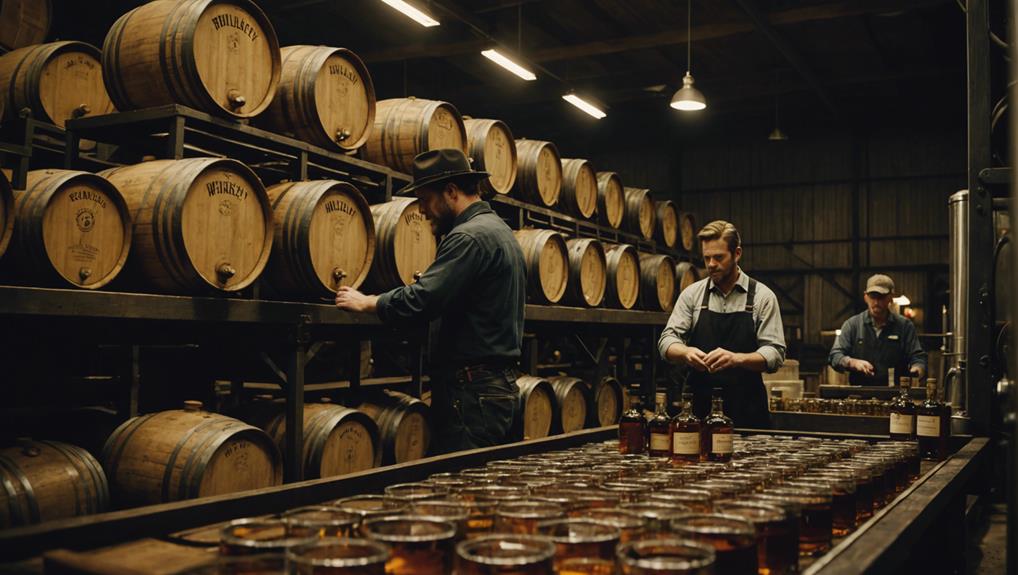
Recent data and market trends indicate a promising outlook for the whiskey sector, with significant growth across all whiskey categories like Bourbon, Scotch, Canadian, and Irish whiskeys.
The industry is expanding, with a notable increase in the use of corn and rye in spirits production, benefiting American farmers and boosting exports. American whiskey exports, including Bourbon, Tennessee, and Rye, have seen a 4 percent rise, showcasing a growing global consumer interest.
This positive trend is attributed to factors such as market modernization, product innovation, consumer preference for premium products, and restraint on hospitality taxes, as highlighted by Kraig R. Naasz, President, and CEO of the Distilled Spirits Council.
The enduring popularity of whiskey among Americans continues to drive industry growth and economic prosperity.
Consumer Preferences Analysis
Consumer preferences for premium and luxury spirits have played a significant role in driving recent growth trends in the distilled spirits market. Super premium whiskeys, including luxury Bourbon, Scotch, Canadian, and Irish whiskeys, have become increasingly popular among American consumers. American whiskey varieties like Bourbon, Tennessee, and Rye have particularly captured the interest of consumers both locally and globally, leading to a notable 7.8 percent increase in sales within this category.
This surge in consumer demand has also resulted in a 4 percent uptick in the export volumes of American whiskeys like Bourbon, Tennessee, and Rye. The industry's positive trajectory can be attributed to consumers' growing preference for premium whiskeys, which has significantly contributed to the overall success and expansion of the whiskey market.
Economic Impact Overview

The distilled spirits market has experienced a significant economic boost in recent years, with a remarkable increase in revenue and sales figures. Various categories of whiskey have seen substantial growth, reflecting consumer demand and market trends. This positive performance is attributed to factors like market modernization and ongoing product innovation.
The surge in whiskey sales has resulted in billions of dollars in revenue, demonstrating the industry's strength and resilience. This growth not only benefits producers and marketers but also supports the expansion of related sectors like agriculture and exports. The success of the whiskey industry underscores its importance in the economy, solidifying its position as a key player in the alcoholic beverages market.
Whiskey Export Trends
The growing global demand for American whiskeys like Bourbon, Tennessee, and Rye has led to a significant increase in whiskey export volumes. This rise of 4% in export volumes reflects the increasing interest from consumers worldwide, benefitting American farmers who are seeing a boost in the use of corn and rye in spirits production.
The steady growth in export volumes highlights the international appeal of American whiskeys and the industry's ability to meet the demands of an expanding global market. As consumers lean towards premium spirits, the export of American whiskeys continues to be vital for the industry's growth and success.
Market Modernization Impact

Market modernization has significantly impacted the whiskey industry, driving its growth and ability to adapt to changing consumer preferences and market dynamics. Through technological advancements and evolving consumer behaviors, the industry has embraced innovation to meet the demands of a dynamic market landscape.
This modernization has enabled producers to streamline processes, enhance distribution channels, and respond swiftly to consumer trends. These changes have not only improved operational efficiency but have also expanded market reach and enhanced customer engagement.
Conclusion
Amidst the whiskey craze sweeping the nation and the booming growth of the industry, the future of this beloved spirit shines brightly like a newly polished copper still.
With sales skyrocketing and consumers showing a preference for premium varieties, the whiskey industry stands strong like a sturdy oak barrel, ready to face any challenge.
As market advancements and creative new products propel this spirited journey forward, the outlook appears promising for all enthusiasts of this timeless libation.